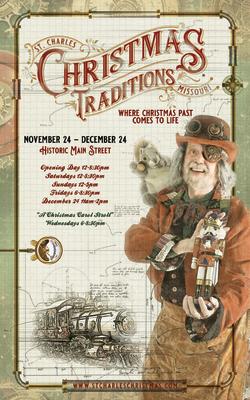



2024 will mark FIFTY SEASONS of Saint Charles Christmas Traditions®! For half a century, this festival has made the holiday spirit of the past come to life for the young and young at heart. With a unique blend of storytelling, history, and fairy tale whimsy, guests are welcomed into a world of yuletide nostalgia and fantasy where reindeer fly, sugarplums dance in your head, and an array of international ambassadors invite you to explore unique holiday customs from around the world.

Discover a holiday feast for all of your senses: experience the taste of genuine hot-roasted chestnuts fresh from an open fire, witness the pageantry of a delegation of global Santa figures dressed in the cultural attire of their home countries, listen to the timeless Christmas melodies sung by Victorian carolers, breathe in the aroma of the crisp pine greenery that festively trims the historic district, as you feel the well-worn character of the centuries-old bricks of Main Street under your feet. We proudly welcome you to explore the yuletide magic of this one-of-a-kind festival as we invite you to discover the wonder, discover the memories, and discover why Saint Charles is the place where Christmas past comes to life!
Each Friday, Saturday, and Sunday from November 29 to December 24 - you'll experience the magic of Christmas Traditions. From the Legends of Christmas - like Santa Lucia and Ebenezer Scrooge, to unique displays like - Oh Christmas Tree: The Evolution of an Icon and our Holiday Food Hall of Fame, to endless opportunities to find that perfect gift for everyone on your list - historic Main Street and Saint Charles Christmas Traditions® are the perfect recipe for the holidays.
On Wednesday evenings, don't miss your chance to step into Charles Dickens' enduring holiday classic A Christmas Carol. Main Street will be transformed into the foggy streets of 1840s London when Christmas Traditions® presents: "A Christmas Carol" Stroll.
If you're looking for a great opportunity to visit with the big man himself, Santa will be hosting guests in the Historic KATY Train Depot in Frontier Park on Opening Day, Saturdays, Sundays, and Christmas Eve. Capture the memory with a high-quality professional photo with Santa as a souvenir of your visit.
The Festival is a feast for the senses, but we know that many of our guests are more sensitive to the sights, sounds, and crowds during a busy festival. For those guests, we are proud to offer a free, Sensory-Friendly Experience - all that is required is an RSVP.
Welcome to Saint Charles Christmas Traditions®!